
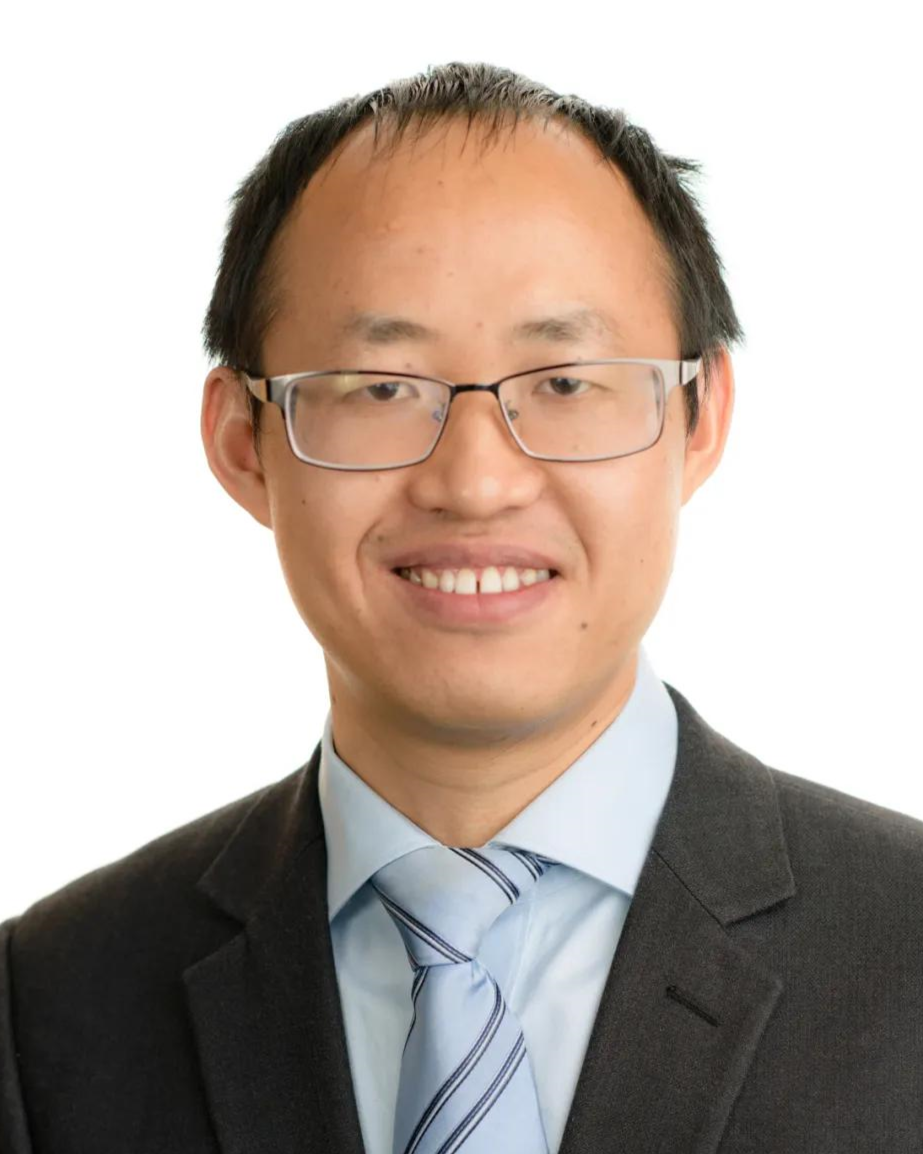
 | Prof. Yong ZengSoutheast University, China Yong Zeng, IEEE Fellow, Young Chief Professor of Southeast University and Purple Mountain Laboratory, Nanjing, China. He received the Bachelor of Engineering (First-Class Honours) and Ph.D. degrees from Nanyang Technological University (NTU), Singapore. From 2013 to 2018, he was a Research Fellow and Senior Research Fellow at the National University of Singapore (NUS). From 2018 to 2019, he was a Lecturer at the University of Sydney, Australia. Prof. Zeng was listed as Clarivate Analytics Highly Cited Researcher for 7 consecutive years (2019-2025), AI2000 Most Influential Scholars in the field of Internet of Things for 4 consecutive years (2021-2024), Stanford "Top 2% of Scientists in the World - Lifetime Influence". Prof. Zeng is the recipient of Australia Research Council (ARC) Discovery Early Career Researcher Award (DECRA), IEEE Communications Society Asia-Pacific Outstanding Young Researcher Award, and won 10 international and domestic best paper awards including IEEE Marconi Award (2020 and 2024), Heinrich Hertz Award (2017 and 2020), etc. Prof. Zeng proposed the concept of channel knowledge map (CKM), and his works have been cited by more than42,000 times. He serves on the editorial board of SCI journals such as IEEE Transactions on Communications, IEEE Transactions on Mobile Computing, and IEEE Communications Letters, and leading guest editor of journals including IEEE ComMag, Wireless ComMag, China Communications, and Science China Information Sciences. Prof. Zeng was elevated to IEEE Fellow “for contributions to unmanned aerial vehicle communications and wireless power transfer”. Title: FUAV Wireless Communication and Sensing in Complex Low-Altitude Environment |
 | Prof. Dapeng WuChongqing University of Posts and Telecommunications, China DapengWu, Professor and Doctoral Supervisor, Senior Member of IEEE, Senior Member of China Institute of Communications. He is a recipient of the National Hundred‑Thousand‑Ten Thousand Talents Project. He works as a guest editor for multiple international journals including IEEE IoT Journal and Elsevier DCN. His long‑term research covers ubiquitous sensing, social computing, intelligent edge computing and other fields. He has presided over or participated in 6 projects supported by the National Natural Science Foundation of China, 2 national IoT special projects, 2 key projects of Chongqing Natural Science Foundation, and more than 20 other provincial‑ministerial‑level projects. He has also led 9 enterprise‑commissioned horizontal projects as principal investigator. He has published 181 academic papers in key domestic and international journals such asIEEE Journal on Selected Areas in Communications,IEEE Internet of Things Journal,IEEE Transactions on Wireless Communications,Acta Electronica Sinica,Journal on Communications andJournal of Electronics and Information Technology. He holds 26 authorized invention patents and has published 2 academic monographs, including 8 ESI Highly Cited Papers. He won the Best Paper Award at IEEE Greencom 2019 and IEEE WASA 2016, as well as the 2018 Best Journal Paper Award in the IEEE multimedia field. He received the First‑class Prize of Chongqing Science and Technology Progress Award in 2012 and 2018, and was honored as an Outstanding Scientific and Technological Worker by the 7th Chinese Institute of Electronics. Title: From CPS to CPSS: Social Computing-Empowered Network Modeling and Resource Scheduling |
 | Prof. Lin ChenMacao Polytechnic University, China Lin Chen received his B. Sc. degree in Radio Engineering in 2002 from Southeast University, Nanjing, China, his M. Sc. in Networking in 2005 from University of Paris 6, his engineer and Ph. D. degree in Computer Science and Networking in 2005 and 2008 from Telecom ParisTech, Paris. From 2009 to 2019, he was an associate professor at University of Paris-Sud. From 2019 to 2025, he was a professor at Sun Yat-sen University. Since 2025, he has been a professor at Macao Polytechnic University. He worked as a Postdoc Researcher at Telecom ParisTech during 2008-2009 and a visiting researcher at NICTA in 2008.He was a member of the Institut Universitaire de France (class 2018) and received the CNRS Bronze Medal in 2018. His research interests are centered around algorithm design and analysis in networked systems. Title: Entanglement Distribution in Quantum Networks |
 | Prof. Chengchao LiangChongqing University of Posts and Telecommunications, China Chengchao Liang is a Professor and Ph.D. supervisor at the College of Communication and Information Engineering, Chongqing University of Posts and Telecommunications (CQUPT). He is a recipient of the "Funding Program for High-level Overseas-educated Talents" from the Ministry of Human Resources and Social Security, a "Bayu Scholar" (Youth) of Chongqing Municipality, and a selected member of the "Wenfeng Young Talent Program" at CQUPT. He serves as the Executive Deputy Director of the "Chongqing Key Laboratory of Mobile Communication Technology" and is a member of the IMT-2030 (6G) Promotion Group. He earned his Ph.D. from Carleton University in Canada in 2017, where he was awarded the Governor General’s Medal. His long-term research interests encompass mobile communications, wireless networks, satellite internet, and optimization theory. He possesses extensive expertise in areas such as access and mobility management for low-Earth orbit (LEO) satellites, wireless network virtualization and slicing, mobile communication protocol design, and wireless system optimization. His research has been recognized with several awards, including a Second Prize for Scientific and Technological Progress from the China Institute of Communications (as the lead contributor), a Second Prize for Natural Science from Chongqing Municipality (as the second contributor), and a First Prize for Innovation in Industry-Academia-Research Cooperation from Chongqing Municipality (as the lead contributor). Over the past five years, he has led five research projects at the provincial or ministerial level—including those funded by the National Natural Science Foundation of China—as well as a project supported by the Canadian MITACS foundation. He has also overseen the development of simulation platforms for satellite internet mobility management. He has published over 100 high-quality academic papers in his field, which have garnered more than 1,100 citations in SCI-indexed journals (excluding self-citations), and he holds over 20 domestic and international patents. Previously, he participated in the 3GPP 5G R15 & R16 standardization process. Currently, he serves on the editorial boards of several SCI-indexed journals, including *Transactions on Emerging Telecommunications Technologies*, *EURASIP Journal on Wireless Communications and Networking*, and *Computer Communications*. Title: 6G Key Technologies: NTN Progress and Key Challenges |