Speech Title: Intelligent Sensing: Challenges and Opportunities

2025 5th International Conference on Wireless Communication, Networking and Internet of Things
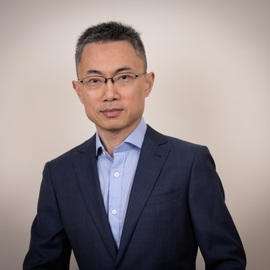
Prof. Tao Gu
IEEE Fellow, AAIA Fellow, ACM Distinguished Member
Macquarie University, Australia
Bio: Tao Gu is currently a Professor in the Department of Computing at Macquarie University in Sydney. He holds a Ph.D. in Computer Science from the National University of Singapore, an M.Sc. in Electrical and Electronic Engineering from Nanyang Technological University, and a B.Eng. in Automatic Control from Huazhong University of Science and Technology.The long-term objective of his research is to explore innovative methods for sensing and connecting the physical world, while integrating AI intelligence to enable the development of new applications. His current research focuses on areas such as the Internet of Things, Ubiquitous Computing, Mobile Computing, Embedded AI, Wireless Sensor Networks, and Big Data Analytics. Further details about specific research projects can be found on the Projects page. His work is regularly published in leading journals and conferences, including ACM/IEEE ToN, IEEE JSAC, IEEE TMC, SenSys, UbiComp, IPSN, and INFOCOM.
Abstract:
In a rapidly evolving digital landscape, the paradigm of intelligent sensing has emerged as a transformative technology, enabling us to perceive and interact with the world around us in unprecedented ways. This talk will delve into the multifaceted realm of intelligent sensing technologies, offering a comprehensive exploration of their diverse applications and profound impact on our lives. I will begin with Millimeter Wave Sensing, discovering how these highfrequency waves are revolutionizing our ability to sense, map, and analyze our surroundings with remarkable precision. Next, I will dive into WiFi Sensing, where ubiquitous WiFi signals become a powerful tool for understanding human behavior, occupancy patterns, and health monitoring. Acoustic Sensing will unveil the fascinating world of sound-based sensing. Explore how audio signals, beyond mere communication, are harnessed to detect anomalies, monitor structural integrity, and enhance our understanding of natural environments.
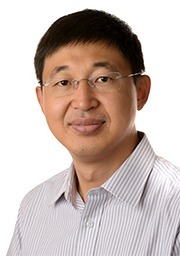
Prof. Yonghui Li
IEEE Fellow
The University of Sydney, Australia
Bio: Yonghui Li (Fellow, IEEE) received the Ph.D. degree from the Beijing University of Aeronautics and Astronautics, Beijing, China, in November 2002.,Since 2003, he has been with the Centre of Excellence in Telecommunications, The University of Sydney, Sydney, NSW, Australia, where he is currently a Professor and the Director of the Wireless Engineering Laboratory, School of Electrical and Computer Engineering. His current research interests are in the area of wireless communications, with a particular focus on MIMO, millimeter-wave communications, machine-to-machine communications, coding techniques, and cooperative communications. He holds a number of patents granted and pending in these fields.,Prof. Li is the recipient of the Australian Queen Elizabeth II Fellowship in 2008 and the Australian Future Fellowship in 2012. He received the Best Paper Awards from IEEE International Conference on Communications 2014, IEEE PIRMC 2017, and IEEE Wireless Days Conferences 2014. He is listed as a Clarivate Highly Cited Researcher. He was an Editor of IEEE Transactions on Communications and IEEE Transactions on Vehicle Technology. He also served as a Guest Editor for several IEEE journals, such as IEEE Journal on Selected Areas in Communications, IEEE Communications Magazine, and IEEE Internet of Things Journal.
Speech Title: Beyond 5G for Industrial IoT
Abstract:
Connected smart objects, platforms and environments have been identified as the next big technology development, enabling significant society changes and economic growth. The entire physical world will be connected to the Internet, referred to as Internet of Things (IoT). The intelligent IoT network for automatic interaction and processing between objects and environments will become an inherent part of areas such as electricity, transportation, industrial control, utilities management, healthcare, water resources management and mining. Wireless networks are one of the key enabling technologies of the IoT. They are likely to be universally used for last mile connectivity due to their flexibility, scalability and cost effectiveness. The attributes and traffic models of IoT networks are essentially different from those of conventional communication systems, which are designed to transmit voice, data and multimedia. IoT access networks face many unique challenges that cannot be addressed by existing network protocols; these include support for a truly massive number of devices, the transmission of huge volumes of data burst in large-scale networks over limited bandwidth, and the ability to accommodate diverse traffic patterns and quality of service (QoS) requirements. Some IoT applications have much stringent latency and reliability requirements which cannot be accommodated by existing wireless networks. Addressing these challenges requires the development of new wireless access technologies, underlying network protocols, signal processing techniques and security protocols. In this talk, I will present the IoT network development, architecture, key challenges, requirements, potential solutions and recent research progress in this area, particularly in 5G and beyond 5G.

Prof. Maode MA
IET Fellow
Qatar University, Qatar
Bio: Prof. Maode Ma, a Fellow of IET, received his Ph.D. degree from the Department of Computer Science at the Hong Kong University of Science and Technology in 1999. Now, Prof. Ma is a Research Professor in the College of Engineering at Qatar University in Qatar. Before joining Qatar University, he has been a faculty member at Nanyang Technological University in Singapore for over 20 years. He has extensive research interests including network security and wireless networking. He has led 26 research projects funded by government, industry, military, and universities in various countries. He has supervised 25 research students to get their Ph. D degrees. He has been a conference chair, technical symposium chair, tutorial chair, publication chair, publicity chair, and session chair for over 100 international conferences. He has been a member of the technical program committees for more than 200 international conferences. Prof. Ma has more than 500 international academic publications including over 250 journal papers and about 250 conference papers. He has edited a few technical books and produced over 28 book chapters. His publication has received over 10,000 citations in Google Scholar. He has delivered over 90 keynote speeches and 10 tutorials at various international conferences. Prof. Ma currently serves as the Editor-in-Chief of the International Journal of Computer and Communication Engineering and the Journal of Communications. He also serves as a Senior Editor for IEEE Communications Surveys and Tutorials, and an Associate Editor for the International Journal of Wireless Communications and Mobile Computing and International Journal of Communication Systems. Prof. Ma is a senior member of the IEEE Communication Society and a member of ACM. He is now the Chair of the ACM, Singapore Chapter. He has been serving as an IEEE Communication Society Distinguished Lecturer from 2013 to 2016 and from 2023 to 2024.
Speech Title: Batch Message Authentication with Edge Server Supports in IIoT
Abstract:
Within the domain of the Industrial Internet of Things (IIoT), as showcased by smart factories, resource-constrained smart devices generate large amounts of privacy-sensitive data during operation, which enters vulnerable networks. When malicious entities within the network compromise this data, it can result in operational disruption and even incapacitate the entire IIoT ecosystem. For the seamless operation of intelligent production, data recipients must authenticate the incoming data before use. Traditional message authentication methods in the IIoT context often authenticate each message. This approach leads to repetitive processing and added computational costs. Addressing this issue and fortifying data security among smart devices, we've introduced an innovative batch authentication technique anchored in edge computing principles. This method incorporates a robust batch message authentication algorithm and capitalizes on the strengths of edge servers for smart device verification. The proposed protocol not only markedly alleviates the computational load on smart devices but also enhances the efficiency and validity of message verification.

Prof. Lingfeng Shi
Xidian University, China
Bio:Currently, primarily engaged in research in the fields of sensor signal processing, positioning and navigation, wireless communications, and integrated circuit design. Has published over 130 academic journal papers, including more than 100 journal articles and over 20 conference papers at domestic and international conferences. Among these, more than 90 papers are indexed by SCI (nearly 20 in Q2 or above journals, 30 in IEEE journals), over 10 papers indexed by EI, and more than 20 papers indexed by ISP. Holds 21 authorized national invention patents, 1 authorized utility model patent, and 6 national invention patent applications; 2 invention patents have been transferred. Currently a senior member of IEEE, serving as a reviewer for over 20 internationally authoritative SCI journals including IEEE, IET, MEJ, JIE, as well as multiple authoritative domestic academic journals such as Acta Electronica Sinica (Chinese and English editions), Journal of China Communications, and Journal of Electronic Science and Technology of China – Engineering Edition. Also serves as associate editor for IEEE Open Journal of Instrumentation and Measurement, guest editor for Applied Sciences, editorial board member for Computer Science and Technology, and Electronic Products World. Member of the "863" expert group, expert reviewer for the Ministry of Education’s Science and Technology Awards, and science and technology review expert for multiple provincial and municipal science and technology departments.
In recent years, has led four vertical research projects, including national key projects, general projects, Ministry of Education key projects, and Shaanxi provincial general funds, as well as five projects in collaboration with related partner units. Has received two provincial and ministerial level second-class Science and Technology Progress Awards and one university-level Excellent Teacher Award. In teaching, has published two textbooks and one English co-authored book. Main instructor for the undergraduate course "Application-Specific Integrated Circuit Design" and the graduate course "Microwave and RF Integrated Circuits."
Speech Title: Indoor Positioning Technology Based on Smartphones
Abstract:
The Global Positioning System performs well in outdoor environments, but once indoors, due to the obstruction of buildings, satellite signals will rapidly decay or even completely disappear, causing GPS to malfunction. However, over 80% of people's time is spent indoors, and there is a huge demand for precise indoor location services, such as: Large venue navigation: airport, train station, shopping center, museum, hospital. Intelligent parking: Find a vacant spot in a large parking lot and remember your parking location. Public safety and emergency response: Quickly locate trapped individuals in emergency situations such as fires and earthquakes. Business marketing and data analysis: Push nearby discount information to customers in the mall and analyze customer flow trajectories. IoT applications: track assets in warehouses and manage medical equipment in hospitals. Smartphones, as smart terminals carried by modern people, integrate various sensors and naturally become an ideal platform for indoor positioning.